Subtitle: A personal perspective on why controlled production, design investment, exclusivity, and financial discipline matter more than chasing volume in India’s premium saree industry.
In the textile business, growth is often measured by how much you produce. I have always believed that the more important question is: how much value are you creating?
Surat is one of India’s most vital textile and saree manufacturing ecosystems. The sheer production capability here is astonishing, the competition is intense, and the energy is relentless. But operating in an ecosystem of this scale comes with structural realities. Buyers, wholesalers, and brands operate across vastly different payment cycles. Working capital management and payment discipline can become major pressure points for manufacturers.
The industry’s natural response to these working capital squeezes is almost always the same: increase volume. Produce more, push more meters, generate immediate cash flow, and repeat.
When I started building my business, I made a conscious choice not to join that race. I did not want to build an enterprise dependent entirely on raw volume. I wanted to build a business where design investment, exclusivity, strict quality control, and controlled production were the primary drivers of long-term value.
Are We Building a Bigger Business or a Better Business?
Every Managing Director eventually faces a fundamental fork in the road: are you building a bigger business, or a better business?
Leadership isn’t just about scaling capacity; it’s about defining boundaries. An MD must intentionally answer a specific set of operational questions:
- What exact market segment do we want to serve?
- What level of design investment is justified for that segment?
- How much inventory risk are we genuinely willing to carry?
- How do we safeguard our proprietary designs in a fast-copy market?
- How do we maintain uncompromised quality as we grow?
Chasing top line revenue without a clear positioning strategy creates operational chaos and financial friction. Growth with discipline, on the other hand, builds a lasting brand.
Premium Is Not Just a Price Point It Is a Business Philosophy
There is a common misconception in traditional textile hubs that moving into the “premium” segment simply means slapping a higher price tag on a saree. It doesn’t work that way.
Premium positioning is a holistic business philosophy. It demands heavy, continuous upfront investment long before a single piece reaches the market:
[Trend Analysis & Research] ➔ [Fabric & Yarn Selection] ➔ [Design & Colour Development]
                                                                 │
[Quality Control & Packaging] ◄─ [Selective Production] ◄─ [Sampling & Surface Work]
A premium saree begins with the strategic decisions made inside the boardrooms and design studios of the company. If those decisions lack rigour, no amount of marketing will convince a discerning customer to pay a premium.
Why I Believe in Limited Production
The classic mass-production mindset is linear: Produce → Push Volume → Discount to Clear → Repeat.
Our business philosophy flips that model completely: Research → Design → Protect → Produce Selectively → Cultivate Demand.
Operating MetricMass Production ModelLimited Production Model (Our Approach) Primary Goal Maximum Loom UtilizationHigh Design Exclusivity & ValueInventory Risk High (Unsold stock leads to deep discounting)Low (Controlled batches match real demand)Market Positioning Price sensitive commodity Distinctive brand identity Buyer Relationship Transactional & credit heavy Strategic, selective, and disciplined
Controlled production is not a magic solution to every market challenge, but for our business model, it provides structural discipline around working capital, inventory risk, and brand equity.
Customers See the Saree. They Don’t See Everything Behind It.
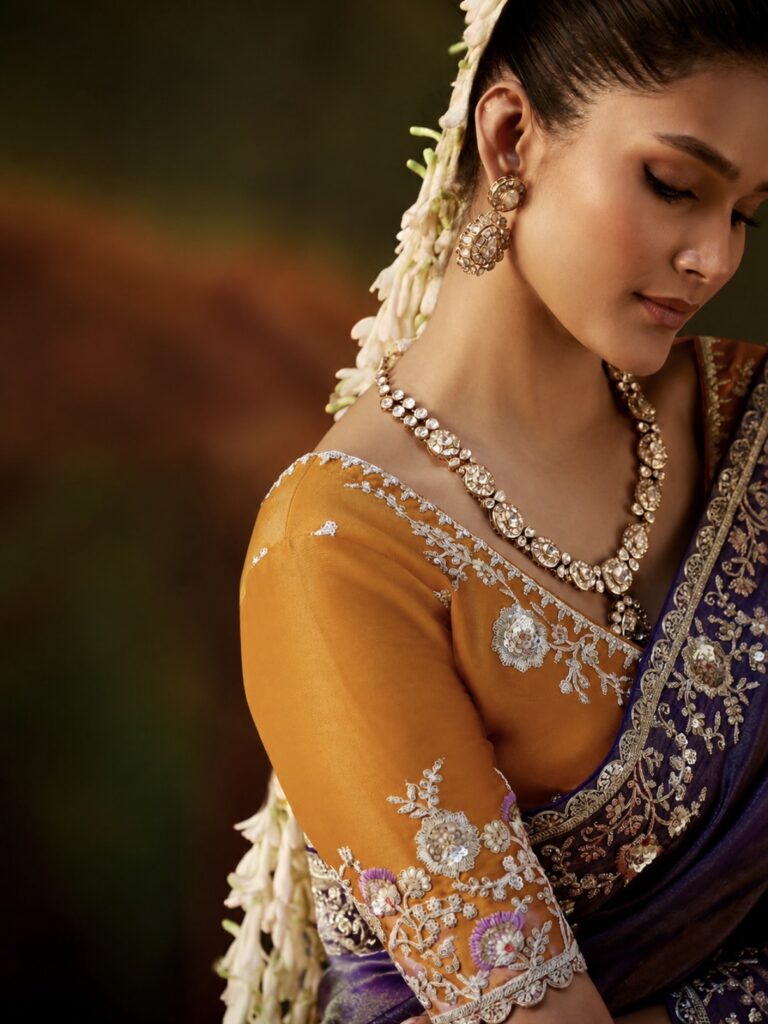
When a customer buys a saree from Nari Design, they see the final product: the hand feel of the fabric, the richness of the embroidery, the precision of the colour palette.
What they don’t see is the hidden infrastructure required to produce that single saree:
- Extensive trend intelligence and archive research
- High salaries for specialized textile designers and craftspersons
- Rigorous sampling cycles where dozens of iterations are discarded
- Investments in design security, high end photography, and custom packaging
When you understand the true cost of creative development, you realize that treating premium manufacturing as a bulk commodity business is fundamentally flawed.
In Fashion, an Original Design Is an Asset
Original designs are the primary asset of a premium fashion house, yet they are notoriously fragile. Early market exposure, unchecked sampling, or loose internal access can erode the exclusivity of a collection before it even launches.
We don’t merely spend money creating a design; we invest time, artistic energy, and market intelligence into it. Protecting that intellectual investment through strict internal privacy protocols, controlled buyer previews, and legal safeguarding is a core business responsibility, not just an administrative task.
The Payment Cycle Is a Business Discipline, Not Just an Accounting Issue
Extended credit terms and unpredictable payment cycles are standard discussions across Surat. But complaining about industry norms doesn’t build a sustainable enterprise.
Every business operates within a broader financial ecosystem. The real responsibility of management is to design an internal business model resilient enough to navigate that ecosystem.
By combining controlled production with premium positioning, disciplined buyer selection, and lean inventory, we protect our working capital. We turn payment management from a daily fire fight into a structured business discipline.
A Premium Business Must Learn to Say No
One of the hardest decisions for a Managing Director is not deciding what the company should do it is deciding what the company must not do.
To build a premium brand, you have to actively reject the temptation to chase every order, every price point, and every micro-trend.
“You do not need every buyer in the market. You need the right buyers, buying the right product, at the right volume, under the right financial terms.”
Building Nari Design With a Long Term Vision
When we look at Nari Design, our objective has never been simply to weave more meters of fabric than the factory next door. Our objective is to build a structured fashion organization centered on design integrity, technological adoption, and deep customer trust.
Whether developing collections for high-festive wear, modern bridal celebrations, or contemporary traditional silhouettes, our focus remains fixed on creating long term brand equity rather than short-term volume spikes.
Why Surat Has the Potential to Become More Than a Manufacturing Hub
Surat’s underlying strengths its synthetic and natural fabric capabilities, processing units, embroidery networks, and skilled workforce are unmatched globally.
However, the next phase of Surat’s growth will not be defined by how many meters of fabric the city produces, but by how much fashion value it can create. The transition from a pure textile manufacturing hub to a high-value fashion ecosystem is already underway, and business models built on design and discipline will lead that shift.
The Future Belongs to Businesses That Understand Value
As we look toward the future of the Indian ethnic wear market, several key shifts are becoming clear:
- Consumer Mindset: Buyers are increasingly seeking personal identity and distinct craft over mass-market repetitive patterns.
- Technology Integration: AI driven trend forecasting, digital design archiving, and precision manufacturing are streamlining development.
- Brand Evolution: The boundary between “manufacturer” and “brand” is permanently blurring, opening massive domestic and global opportunities for Indian ethnic wear.
A Managing Director Is Not Only Responsible for Growth
At its core, leadership is an exercise in balance:
Leadership=Growth+Risk Management+Quality Control+Financial Discipline
My ultimate responsibility as Managing Director is not to manufacture the maximum possible number of sarees this quarter. My responsibility is to build an organization that creates consistent, uncompromised value for decades to come.
Producing With Purpose
When I started my journey in this industry, I held a simple conviction: I did not want to build a enterprise that survived simply because it produced more than everyone else. I wanted to build a business that grew stronger because it designed better, respected its own capital, and protected the integrity of its work.
For me, limited production is not about producing less for the sake of it. It is about producing with purpose.
The future of fashion will not belong to those who can merely produce at scale. It will belong to those who know what to produce, why to produce it, for whom to produce it and precisely when to say no.
How does this version read for your Medium publication, Mahesh Choudhary ? If you’d like to adjust the emphasis on any specific section such as expanding on Nari Design’s collection cycle or diving deeper into Surat’s evolving ecosystem let me know!