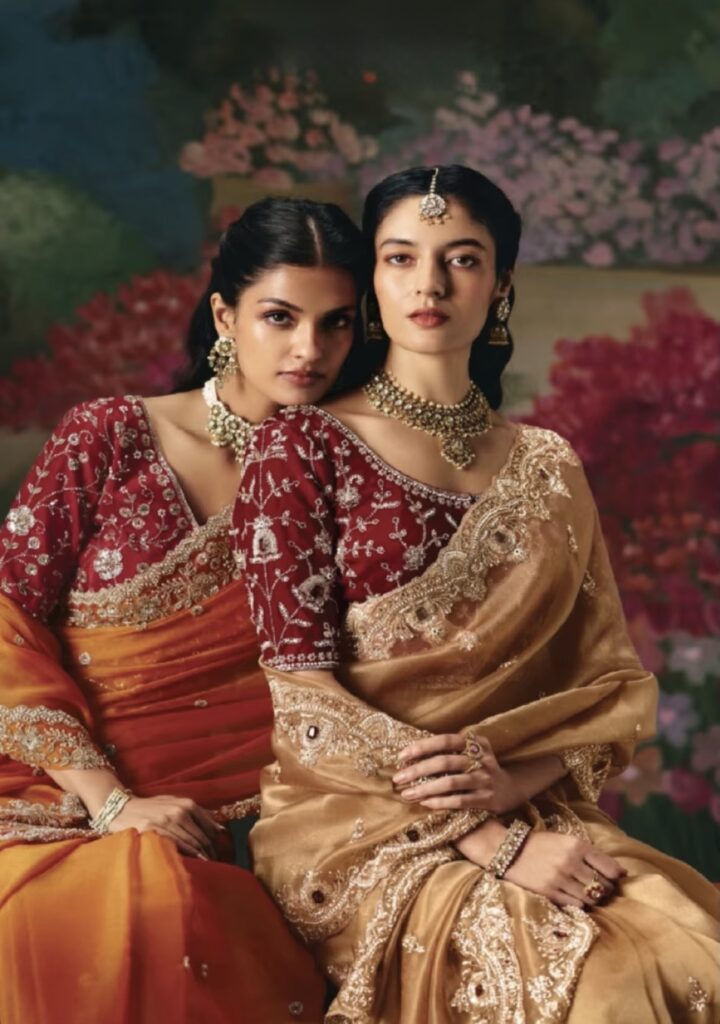
1. The Opening: Surat Taught Me How Big Manufacturing Can Be
If you walk through the industrial hubs of Surat on any given morning, the rhythm of the city hits you immediately. It is an unrelenting, rhythmic hum of thousands of looms, dye houses, and processing units operating at maximum velocity. Surat is the undisputed engine room of India’s textile ecosystem. It is a city engineered for sheer volume speed, scale, infinite variety, and relentless cost competitiveness.
When I first immersed myself in this environment, the scale was exhilarating. But as I watched millions of meters of fabric move through the pipelines every day, a single, uncomfortable question kept repeating in my mind:
Can we build something truly premium in a market that is known almost entirely for mass production?
The ecosystem was geared toward high turnover and thin margins. The standard approach was simple: cut costs, speed up production, match the lowest prevailing market price, and move volume. But my vision was fundamentally different from the beginning. I didn’t want to operate a facility that merely processed yards of polyester or silk to satisfy mass volume. I wanted to build a premium brand rooted in craftsmanship, uncompromised quality, and enduring customer trust.
2. My Vision Was Bigger Than Manufacturing Sarees
There is a profound difference between making a product, running a manufacturing plant, and building a brand.
- Making a product is transactional. You source raw materials, process them through a machine, package them, and sell them for a margin.
- Building a manufacturing culture requires discipline. It means designing systems, managing supply chains, and keeping operations running smoothly.
- Building a brand is an emotional and operational promise. It is the uncompromising standard you maintain even when no one is checking.
From day one, my objective was never to see how many thousands of sarees we could pump out in a single shift. The core metric of our business was different: How consistently can we create sarees that customers are genuinely proud to wear?
Shifting from a volume mindset to a value mindset required rethinking every single stage of our operations. It meant obsessing over fabric purity and drape rather than just cost per meter. It meant investing heavily in intricate embroidery, meticulous hand-finishing, strict color fastness, and rigorous quality inspection. It required building a culture where a single pulled thread or an uneven dye lot wasn’t dismissed as an acceptable margin of error, but treated as a failure of our brand promise.
3. The First Reality Check: Price vs. Quality
The Indian saree market is notoriously price-sensitive. Buyers, wholesalers, and retail partners are conditioned to compare prices down to the last rupee. In an industry driven by aggressive price competition, choosing the premium path immediately puts you at a financial and operational disadvantage in the early stages.
When you upgrade your raw silk or organza, invest in higher-grade zari, hire master artisans, and enforce a multi step quality control process, your cost structure changes dramatically. Inevitably, the market responds with resistance: “Why is your piece priced higher than the manufacturer down the road who offers a similar look?”
This was my first true leadership test.
When the market demands a lower price, the easiest operational lever to pull is compromise. You use a lighter fabric base, cut back on embroidery density, or rush the finishing stage. But every time you compromise quality to meet a low price point, you erode the very foundation of a premium brand.
I learned that building a premium brand means accepting that you will not be the right choice for everyone. Our task as leaders is not to join the race to the bottom, but to master the complex balancing act: Cost + Quality + Design + Production Efficiency + Customer Value.
4. The Biggest Challenge Was Not Production It Was Management
When entrepreneurs talk about manufacturing, they often focus on machinery, raw material sourcing, and technology. But as our operations expanded, I realized a fundamental truth: the hardest part of scaling a premium brand isn’t the production process itself. It is management.
Anyone with capital can purchase state-of-the-art machinery or buy high-grade raw fabric. What you cannot buy off the shelf is operational consistency across hundreds of human decisions made every single day.
As we grew, the daily complexity multiplied:
- Managing inter-departmental communication between design teams, dyeing master units, embroidery workshops, and packaging staff.
- Maintaining precise production schedules while refusing to rush delicate hand-finishing stages.
- Handling human errors constructively while maintaining an absolute zero-defect policy for final dispatch.
- Retraining a workforce conditioned by the surrounding mass-market environment to slow down and focus on meticulous detail.
Machines can increase production, but only strong management can build consistency.Without rigorous operational systems, clear accountability, and constant management oversight, scale dilutes quality. Managing people, expectations, and operational discipline became my primary duty as Managing Director.
5. Building Premium Quality in a Mass-Production Ecosystem
Operating a premium brand inside a mass production ecosystem like Surat requires a complete inversion of manufacturing logic.
Mass production asks: How fast can we produce this lot?
Premium manufacturing asks: How accurately can we execute this detail?
To cultivate this mindset, we had to re engineer our workflow from the ground up:
- Fabric Selection & Testing: Testing every fabric lot for drape, tensile strength, and color absorption before a single cut is made.
- Design Development: Moving beyond seasonal trends to create balanced color palettes and timeless motifs that do not feel mass-produced.
- Craftsmanship & Embroidery: Ensuring that intricate embroidery work has clean backings, secure embellishments, and zero puckering.
- Finishing & Packaging: Implementing multi point quality inspection teams who evaluate the saree under high-intensity lighting, checking borders, fall alignment, and blouse piece symmetry before custom packaging.
By establishing these uncompromising checkpoints, we turned the surrounding ecosystem’s strength — its massive supply network — into our advantage, while keeping our internal quality control completely isolated from mass-market shortcuts.
6. The People Behind Every Saree
A founder or Managing Director often becomes the face of a company, but positioning a manufacturing brand as the achievement of a single individual is an illusion. A premium saree is never the result of one leader’s vision; it is the cumulative output of hundreds of skilled hands.
Behind every single piece that leaves our facility is a human story:
- The master designers balancing traditional motifs with contemporary sensibilities.
- The textile technicians who calibrate the dye vats to achieve the exact shade of crimson or pastel.
- The skilled artisans who sit for hours over frame embroidery, detailing intricate threadwork.
- The quality supervisors who meticulously check every meter of finished fabric.
- The logistics and office staff who ensure every client order arrives on schedule.
A premium saree may carry a brand name, but behind that name are hundreds of hands, skills, and daily decisions. Nothing brings me greater professional fulfillment than watching our team members grow alongside the business seeing artisans elevate their craft, supervisors step into management roles, and young staff members build long-term careers with us.
7. I Faced Problems But I Never Changed the Vision
Every manufacturing journey is marked by periods of disruption. We faced aggressive price undercutting from market competitors, unexpected surges in raw material costs, production bottlenecks during peak wedding seasons, and management oversights that cost us time and capital.
There were moments when the path of least resistance pivoting back to low-cost, high-volume production looked financially tempting in the short term.
However, leadership requires separating strategy from vision.
When operational bottlenecks occurred, we restructured our managerial hierarchy. When quality errors surfaced, we overhauled our inspection protocols. When raw material costs fluctuated, we improved our procurement efficiency.
We constantly adjusted our processes, production techniques, and team structures but we never compromised on our fundamental objective: to build a trusted, premium Indian saree brand.
8. Why I Didn’t “Go Back” When Things Became Difficult
When people ask why I didn’t pivot back to easier, high-volume mass production during tough market cycles, my answer comes down to conviction. I held onto a few core beliefs about our market and our heritage:
- The Premium Indian Consumer Exists and Is Growing: Modern consumers are increasingly discerning. They value authenticity, flawless finishing, and longevity over cheap, disposable fashion.
- Surat Has World Class Potential: Surat possesses incredible industrial infrastructure. There is no reason why this city cannot produce luxury textiles that stand proudly alongside global luxury houses.
- Indian Craftsmanship Deserves a Dignified Platform: Traditional Indian textile arts deserve execution that respects the artisan’s skill rather than rushing it through a cost-cut process.
- Trust Cannot Be Short Circuited: A genuine brand takes years to build, but can be destroyed in days by inconsistent quality. The market always tests your commitment to quality before it rewards you with brand equity.
9. From a Business Idea to a Stable Premium Brand
Today, looking across our manufacturing operations, stability has replaced the chaos of our early days. But that stability did not come from a single breakthrough, a viral collection, or a strokes of luck moment.
It was built through thousands of small, unglamorous daily improvements:
- Refining a border-stitching process by a fraction of a millimeter.
- Standardizing color-matching formulas across production batches.
- Training supervisors to catch defects at step two instead of step ten.
- Building direct, transparent relationships with clients across domestic and international markets.
By consistently maintaining our positioning, we transformed from an ambitious manufacturing enterprise into a reliable, recognized producer of premium sarees serving clients who value consistency above all else.
10. What Surat Taught Me About Business
Building a business in the heart of India’s textile hub provides a real-world masterclass in strategy and operations. Here are the core leadership principles Surat taught me:
- Lesson 1: Scale is not the same as quality. High volume measures machine capacity; quality measures management capability.
- Lesson 2: Price competition destroys differentiation. If your only advantage is being cheap, someone else will eventually figure out how to be cheaper.
- Lesson 3: Premium customers buy consistency. A customer might buy a beautiful design once, but they only return if the quality is identical every single time.
- Lesson 4: People are part of the product. You cannot produce a premium physical item in an environment where people feel undervalued or unguided.
- Lesson 5: Management must evolve before the business can scale.Production bottlenecks are almost always leadership and systems bottlenecks in disguise.
- Lesson 6: Long-term brand equity requires short-term sacrifices.Turning down lucrative, low-quality volume orders is necessary to preserve brand integrity.
- Lesson 7: A brand is built through repetition. Quality, on time delivery, clear communication, and post-sales support repeated thousand of times is what creates reputation.
11. My Vision for the Future
As we look ahead, our mission goes far beyond expanding manufacturing throughput. The larger vision is to solidify Surat as a global symbol for modern Indian luxury, design excellence, and world class textile craftsmanship.
To achieve this, our focus remains on:
- Integrating Technology with Craftsmanship: Using modern ERP systems and precise quality-testing tools to support traditional hand-finishing and weaving techniques.
- Elevating Design Innovation: Investing heavily in R&D to blend traditional Indian motifs with contemporary drapes and lightweight, comfortable fabric blends.
- Expanding Global Reach: Delivering premium Indian draping traditions directly to international markets and global diaspora audiences who demand high standards.
- Investing in Human Capital: Building continuous skill-development programs for our workforce, ensuring our artisans and staff grow as the brand scales.
12. Closing: The Journey Is Still Going
When I reflect on the path that brought us here, I don’t just see loom counts, turnover figures, or operational milestones. I see the difficult decisions, the midnight production checks, the mistakes that taught us hard lessons, and the dedicated team that stood by the vision when shortcut paths were available.
I am proud that we didn’t simply learn how to manufacture more sarees in Surat. We learned how to manufacture better.
My journey from Surat’s mass production ecosystem toward premium saree manufacturing has taught me one enduring truth: A brand is not built when business is easy. A brand is built when you continue believing in your standards when the easier choice is to compromise.