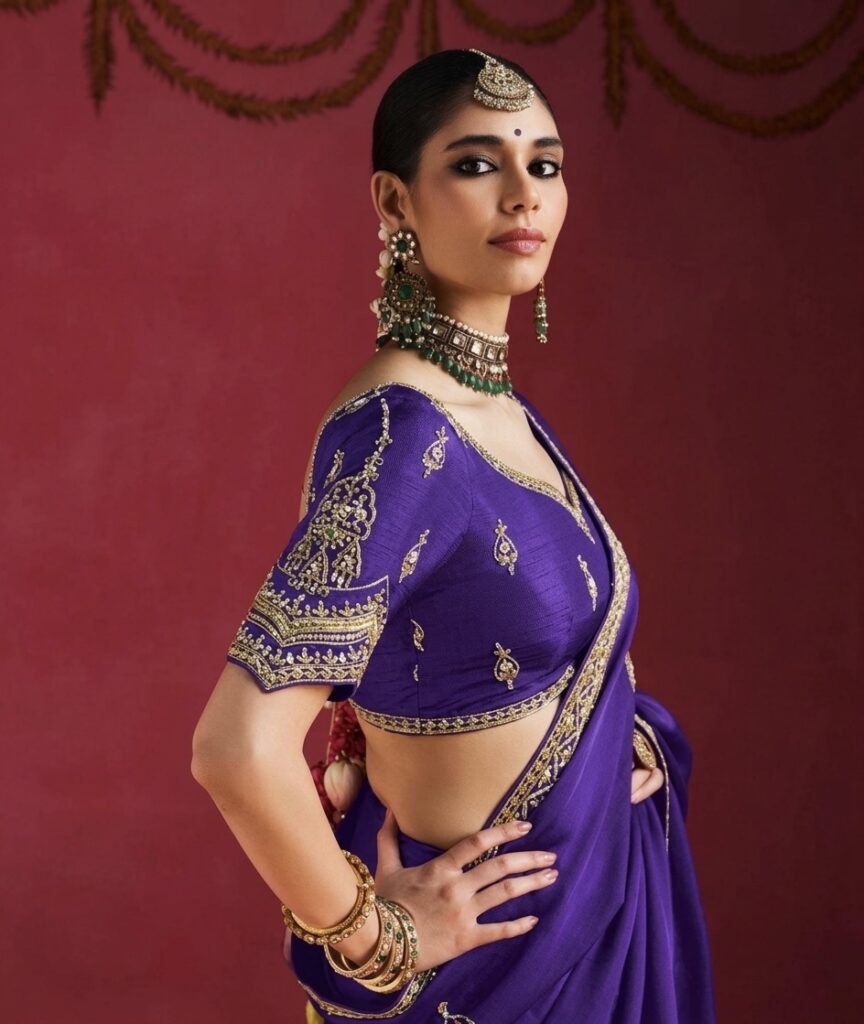
Inside the technology, design intelligence, manufacturing discipline, privacy, quality and management vision shaping the next generation of Surat’s premium saree industry.
By Mahesh Choudhary
Managing Director, Nari Design Premium Saree India
When a customer sees a premium saree, they see the final product. A manufacturer sees everything that happened before that moment.
Behind a single elite saree lies an intricate web of strategic design thinking, material selection, precise color chemistry, technological precision, artisan handwork, multi-stage quality checkpoints, confidential development, and strict operational discipline.
The end product is not merely an artistic creation it is the culmination of hundreds of coordinated management decisions executed across a complex manufacturing pipeline.
The Surat Advantage: Ecosystem as Strategy
Surat possesses an industrial textile infrastructure that few manufacturing hubs globally can mirror.
Raw Fabric R&D → Weaving → Dyeing & Processing → Digital Printing →
High-Speed & Position Embroidery → Handwork / Khatli → Garmenting & Finishing →
Quality Control → Precision Packaging → Global Logistics
Our strength is not one machine or one factory our strength is the entire Surat manufacturing ecosystem. Daily, Surat produces over 30 million meters of raw grey fabric and 25 million meters of processed textile, supported by hundreds of processing units and thousands of specialized embroidery setups.
However, having an ecosystem is merely an environmental advantage. Knowing how to orchestrate that ecosystem with discipline and strategic intent is the true competitive advantage.
The Journey Begins With Design Not Production
In commodity manufacturing, the traditional starting question is: “What can we produce at scale?”
In elite premium manufacturing, the question must be: “What should we create that carries distinct value?”
Commodity Approach:
Trend → Copy → Mass Production → Price Competition
Premium Strategic Pipeline:
Trend Research → Interpretation → Material Selection → Original Design → Prototype Sampling → Managed Scale
Elite production requires studying global runway movements, international color forecasts, evolving wedding dynamics, and modern consumer preferences translating those signals into original concepts before a single loom or machine is engaged.
New Machinery & Technological Transformation
Advanced textile technology is fundamentally reshaping how premium sarees are constructed. Modern industrial exhibitions like SITME 2026 showcase automated single head Zardosi-capable machinery, position embroidery units for Khatli style work, and high speed multi head bead setups capable of running up to 1,800 RPM.
Technology offers critical operational enhancements:
- Precision motif registration across long fabric spans
- Strict repeatability across large production runs
- Accelerated sampling lead times
- Uniform stitch density and thread tension
Yet, technology can make production faster it cannot replace design intelligence, aesthetic proportion, or cultural intuition.
Machine + Handwork: The Hybrid Future
The future of luxury saree manufacturing does not lie in choosing between automated technology and traditional handcraft. It lies in an intelligent hybrid collaboration:
Dimension Industrial Machinery Skilled Artisan Craftsmanship Primary Strength Structural precision, speed, efficiency, scaleArtistic nuance, intricate finishing, character Role in Hybrid Model Base embroidery, heavy motif foundation, border grids Delicate Khatli work, custom stone setting, hand finishing Impact on Final Product Ensures structural durability and delivery timelines Imparts artisanal soul and individual uniqueness
When high-speed position machinery lays down complex structural embroidery grids, skilled artisans can then apply handwork detailing, zardozi accents, and refined edge finishing. This hybrid approach delivers both scale and authenticity.
Privacy as a Key Manufacturing Asset
Developing a premium collection requires substantial capital expenditure from original motif drafting and custom fabric developments to physical sample revisions and color trial batches.
In an industry prone to rapid replication, design privacy is a critical business asset:
- Restricting sample showroom access to authorized teams
- Enforcing non disclosure and pattern-protection protocols internally
- Managing sample distribution digitally through secure channels
- Protecting unreleased seasonal collections prior to market launch
In premium fashion, information and proprietary design assets can be as valuable as the physical product itself.
Discipline Behind Every Premium Saree
Creative talent alone cannot sustain a premium brand. Luxury is sustained through operational discipline across time, sampling, quality control, workforce management, and delivery logistics.
A design concept loses its value if:
- Batch color matching varies across production runs
- Border embroidery alignment shifts during framing
- Thread ends and fall finishing are executed carelessly
- Delivery schedules miss critical festive and wedding retail windows
Premium quality is never an accidental outcome; it is the direct result of disciplined execution.
Quality Starts With the Base Fabric
You cannot engineer a premium finish on a compromised foundation. Material integrity dictates the final drape, color richness, and embroidery longevity.
┌──────────────────────┐
                  │ Premium Foundation   │
                  └──────────┬───────────┘
                             │
     ┌───────────────────────┼───────────────────────┐
     ▼                       ▼                       ▼
Silks & Tissues          Fine Organzas          Chiffons & Georgettes
(Pure Silk, Tissue Silk)  (Lightweight Sheers)   (Fluid Drape & Comfort)
Selecting high grade base fabrics ensures that heavy embroidery or complex digital printing does not distort the weave, compromise the fabric’s hand feel, or impede how the saree drapes on the body.
Cross Departmental Synchronization in Luxury
Delivering an uncompromised product requires every department to operate with a shared standard of excellence:
- Design R&D: Establishes original motifs, proportion guidelines, and color palettes.
- Fabric & Processing: Verifies base weight, tensile strength, and dyeing accuracy.
- Embroidery & Artisans: Executes mechanical precision and intricate handwork accents.
- Production Planning: Controls lead times, machine scheduling, and batch sizes.
- Quality Control: Conducts multi-stage checks from raw fabric to final thread cutting.
- Packaging & Logistics: Protects delicate embroidery and guarantees pristine presentation upon arrival.
The Managing Director’s role is to synchronize these distinct functions into a cohesive, quality-driven operation.
The Managing Director’s Strategic Scope
A modern Managing Director must look far beyond daily unit production targets:
{Strategic Management} {Design Protection} {Tech Capital Allocation} {Cash Conversion Discipline} {Global Market Positioning}
A commodity manufacturer focuses primarily on unit output; a strategic MD builds a resilient, quality driven business ecosystem around that output.
Navigating Trends via Original Interpretation
Staying relevant does not require uncritical trend following or design copying. The development framework should follow a disciplined cycle:
{Observe Market} {Understand Customer Needs} {Develop Original Interpretation} {Prototype & Test} {Scale Production}
By focusing on internal interpretation over external imitation, a brand builds a distinct aesthetic signature that clients recognize and trust.
Redefining Luxury: Why Premium Does Not Mean “Heavier”
A common misconception in ethnic wear is equating luxury directly with heavy embroidery density and high product weight. Modern luxury prioritizes refinement and comfort:
“Luxury is not about adding more decoration. True luxury is knowing what elements to refine, balance, or omit entirely.”
Today’s premium consumer evaluates a saree based on:
- Material drape, breathability, and weight balance
- Subtle, well proportioned motif placement
- Harmonious, modern color palettes
- Impeccable blouse construction and edge finishing
The Evolution of the Modern Saree Consumer
Contemporary young women including Gen-Z and millennial professionals seek sarees that blend traditional elegance with functional ease. They favor light weight fabrics, fluid drapes, contemporary blouse styles, and refined detailing suitable for multi occasion wear.
The next generation of consumers is not walking away from the saree they are seeking sarees designed to complement their active, modern lifestyles.
Transitioning from Contract Manufacturer to Premium Brand
Surat’s next evolution requires moving from white label contract manufacturing to recognized brand building:
- Commodity Manufacturer: Competes on volume, accepts extended credit cycles, and produces according to external buyer specifications.
- Premium Brand: Invests in proprietary R&D, controls design intellectual property, maintains financial discipline, and engages directly with domestic and international customers.
- At Nari Design, our approach is built on this transition: integrating Surat’s manufacturing efficiency with proprietary design protection, premium material standards, and disciplined operational control.
Seven Pillars for the Future of Surat’s Saree Industry
- Intelligent Technology: Deploying advanced machinery for efficiency and precision.
- Preserved Craftsmanship: Protecting and integrating artisan handwork and finishing.
- Original Design R&D: Investing in proprietary creative assets over market replication.
- Uncompromised Quality: Enforcing strict standards from raw thread selection to final packaging.
- Design Privacy: Implementing rigorous internal controls to protect unreleased collections.
- Management Discipline: Structuring scalable, financially sound operational workflows.
- Global Vision: Developing collections tailored for both domestic retail and international export.
Intelligent Manufacturing for the Next Era
The future of Surat’s premium saree industry will not belong simply to those who install the newest machinery. It will belong to manufacturers who intelligently unite technology with human artistry, trend intelligence with original design, volume capability with strict quality control, and industrial scale with disciplined management.
Surat has already built one of the world’s most formidable textile hubs. Our responsibility as the next generation of industry leaders is to manage that ecosystem with vision, protect our original creations, and bring world-class Indian fashion to global markets.