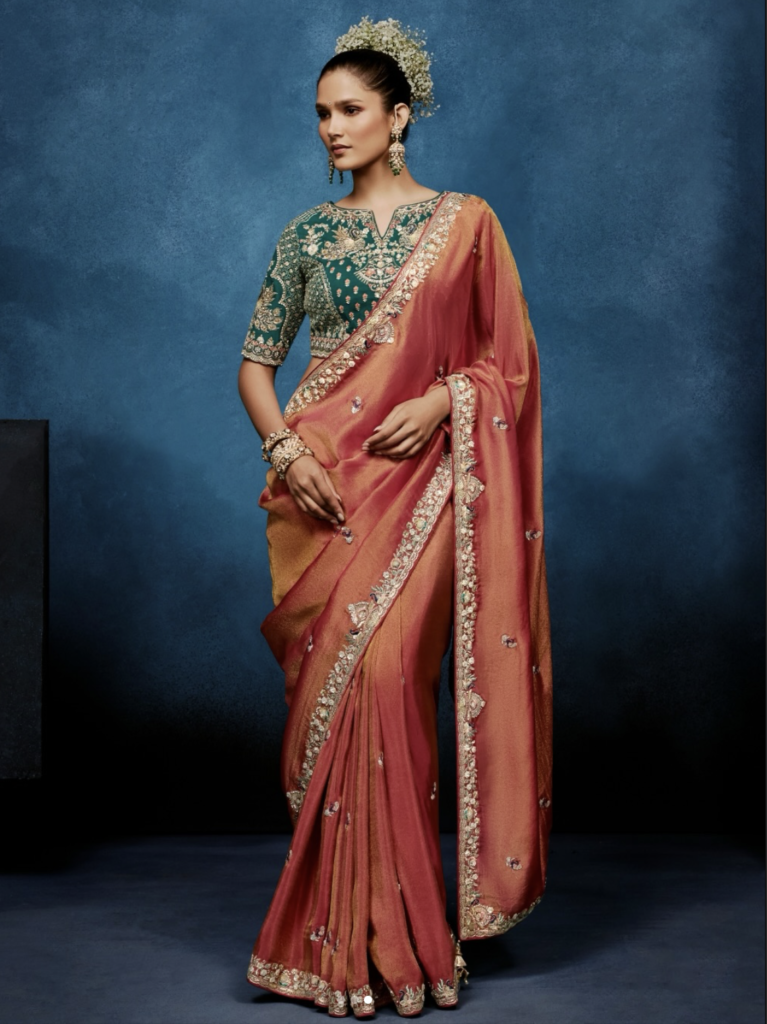
Author: Mahesh Choudhary
Role: Managing Director, Nari Design Premium Saree India
A manufacturer can run high speed embroidery machines around the clock, produce thousands of sarees weekly and offer aggressive discounts per meter yet still struggle to build lasting customer loyalty. Meanwhile, an enterprise that understands its audience, protects its design intellectual property, maintains strict material standards and communicates its story builds an enduring, profitable brand.
In 2026, Surat’s textile entrepreneurs face a defining strategic crossroad. Operating strictly as a low margin contract supplier is becoming increasingly precarious. The central challenge facing our industry is no longer whether we can produce, but whether we can transition from simply selling textile volume to building trusted, high value premium fashion brands.
1 : Surat Is More Than a Textile Manufacturing Hub
Surat’s industrial concentration is a global competitive marvel. Our city handles virtually every tier of the textile value chain within a compact geographical radius :
{Yarn Sourcing} {Weaving} {Dyeing & Processing} {Digital Printing / Embroidery} {Garmenting} {Distribution}
Government assessments, including NITI Aayog’s economic framework studies for the Surat Economic Region, highlight that the district houses over 500 textile mills, more than 1,000 processing plants, approximately 30,000 weaving operations, and thousands of garment factories, with MSMEs comprising nearly 95% of all units.
+-----------------------------------------------------------------------+
|                 SURAT TEXTILE ECOSYSTEM ADVANTAGES                    |
+-----------------------------------------------------------------------+
|  • Rapid Prototyping: Concept to sample lead times measured in hours   |
|  • Material Sourcing: Complete local access to yarns, zari & trims   |
|  • Industrial Workforce: Generations of skilled operators & tailors    |
|  • Integrated Supply Chain: Processing, printing & embroidery hubs   |
+-----------------------------------------------------------------------+
This ecosystem offers unmatched speed to market. A design team can sketch a motif in the morning, source base tissue or silk by mid day and run sample panels on high speed embroidery setups by late afternoon.
However, having an ecosystem is merely a starting advantage. It provides the tools, but it does not guarantee the outcome. The real opportunity for the Surat textile industry in 2026 lies in orchestrating these interconnected capabilities to create distinctive, high value products rather than competing in a race to the bottom.
2 : The Hidden Cost of Price Wars
High volume commodity manufacturing is a legitimate business model, but competing exclusively on price creates severe structural risks :
- Shrinking Profit Margins : Thin gross margins leave zero cushion for raw yarn price spikes, rising electricity tariffs or processing cost increases.
- Capital Trapped in Receivables : Extended credit cycles often stretching 90 to 180 days across regional trading markets severely strain working capital. While waiting for buyer collections, manufacturers must still pay immediate cash expenses like wages, raw materials and utilities.
- Quality Degradation : When price pressure becomes unsustainable, manufacturers are forced to compromise on fabric thread count, embroidery density, or finishing quality, eroding customer trust over time.
- Starved Innovation Budgets : Squeezed margins leave little capital to invest in proprietary design R&D, advanced CAD software, employee training, or modern digital marketing.
Low-Price Commodity Trap:
Undercut Price → Compress Margins → Compromise Quality → Increase Receivables → Lose Market Power
A saree manufacturing business escapes this cycle not by placing an arbitrary luxury price tag on a product, but by establishing a sustainable value proposition that justifies healthy margins.
3 : From Product Selling to Premium Brand Building
Building a premium saree brand requires delivering a consistent, recognizable and trustworthy customer experience across every touchpoint :
- Fabric Foundation : Utilizing high grade base fabrics such as pure silks, tissue, fine organzas, and fluid georgettes that offer superior drape, touch, and longevity.
- Workmanship & Finishing : Ensuring uniform stitch tension, precise border alignment, secure bead placement and pristine thread trimming.
- Thoughtful Curation : Designing cohesive collections rather than random, disconnected single pieces.
- Packaging & Presentation : Protecting delicate embroidery and presenting the garment in a manner that reflects its intrinsic value.
- Reliable Execution : Delivering order specifications accurately and honoring delivery schedules consistently.
Premium is not defined by excessive decoration or inflated pricing premium is defined by the discipline and consistency behind the product.
4 : Original Design Is a Business Asset
In fast-paced manufacturing hubs, copying popular market designs often via digital screenshots is a persistent temptation. However, relying on product imitation destroys long term pricing power. When ten suppliers offer identical motifs on similar fabrics, the product becomes commoditized, leaving price and credit terms as the only remaining leverage points.
Replication Approach:
Copy Market Sample → Saturate Market → Cut Prices → Compress Margins → Lose Distinction
Original R&D Approach:
Trend Intelligence → Material R&D → Proprietary Motif → Prototype Testing → Build Pricing Power
Developing original saree designs requires a structured creative process:
- Trend Intelligence : Analyzing global color movements, regional festive preferences, and changing consumer lifestyles then interpreting those signals into an authentic visual identity.
- Material & Surface R&D : Pairing the correct embroidery techniques with base fabrics to ensure heavy embellishments drape naturally without pulling or tearing the weave.
- Design Confidentiality : Enforcing strict internal IP controls, secure digital CAD file management and restricted sampling access prior to collection launches.
Trend awareness should inspire creative innovation, not serve as a substitute for it. Original design protects profit margins and builds recognizable brand equity over time.
5 : The Role of Strong Leadership and Management
Transitioning from a contract manufacturer to a recognized brand is fundamentally a leadership challenge. Effective textile business management requires a Managing Director to connect creative vision directly with financial and operational control :
Leadership Dimension Reactive Business ApproachExecutive Managing Director Approach Strategic Vision Focuses on filling immediate machine capacity and daily firefighting. Focuses on 3–5 year brand positioning, value creation and market expansion. Team Structure Centralizes all decisions, creating operational bottlenecks. Delegates authority, builds capable department heads and enforces clear SOPs. Financial Oversight Prioritizes top line turnover while ignoring unpaid receivables and cash flow. Monitors gross margins, Days Sales Outstanding and working capital velocity. Quality Control Relies on end of line checkers to catch defects right before packaging. Integrates multi stage quality checks into every tier from raw fabric to dispatch. Product R&D Copies visible market hits to secure quick, low margin orders. Invests in proprietary fabric development, original motifs and protected collections.
A strong textile business is not built by one department working perfectly. It is built when every department understands the same vision and works towards the same standard.
6 : Surat’s Textile Ecosystem Is a Competitive Advantage If Managed Properly
Surat’s industrial value chain operates as an interconnected network. Delivering an uncompromised final product requires synchronization across every stage :
{Fabric Sourcing} {Dyeing/Printing} {Embroidery Khatli} {Garmenting/Blouses} {Quality Audit} {Packaging}
A breakdown at any single node damages the end user experience:
- Inconsistent dyeing shade matching ruins a multi panel garment.
- Improper thread tension during embroidery causes fabric puckering.
- Careless thread cutting or delayed packaging leads to client cancellations.
Strategic leadership treats Surat’s ecosystem as an integrated, precision supply chain that must be managed through documented specifications, technical packs and strict quality audits.
7 : Financial Discipline Is Part of Premium Branding
A brand cannot sustain its market presence if its financial foundation is compromised. Financial discipline is the backbone of sustainable brand building :
- Product Level Profitability : Calculating exact production overheads, raw material costs, and wastage to ensure every collection yields healthy gross margins.
- Receivable Velocity : Enforcing clear payment terms to protect cash conversion cycles and reduce bad-debt exposure.
- Controlled Inventory Management : Utilizing data led, small batch production trials before scaling to prevent capital from stagnating in unsold stock.
- Strategic Reinvestment : Allocating profits intentionally toward design R&D, advanced machinery, quality systems and digital brand development.
Top-line revenue measures operational activity cash flow, gross margins and return on design investment determine enterprise health.
8 : Understanding the Modern Premium Saree Customer
To succeed in premium saree manufacturing, businesses must understand how consumer preferences are evolving especially among millennial and Gen-Z buyers across Indian festive, wedding and international diaspora markets.
Today’s premium consumer prioritizes :
- Lightweight Comfort & Fluid Drape: High-grade tissue silks, fine organzas, pure georgettes and fluid chiffons that offer effortless wearability.
- Sophisticated Restraint: Elegant, well proportioned motif placement and subtle color palettes over heavy, edge to edge embellishment.
- Occasion Versatility : Outfits that transition smoothly from formal wedding rituals to evening celebrations and festive parties.
- Complete Ensemble Finishing : Clean borders, well constructed blouses, and precise edge stitching.
Modern Consumer Values:
Lightweight Drape + Subtle Restraint + Complete Finishing + Versatile Styling
Studying actual consumer behavior allows brands to design curated, highly relevant collections that resonate with modern lifestyles.
9 : Digital Branding, E-Commerce and International Opportunities
Digital infrastructure allows modern Indian manufacturers to communicate directly with trade partners, retailers, and end-consumers globally:
- Digital Showrooms & E-Commerce : Professional digital storefronts featuring high-resolution photography, accurate color representation and clear fabric specifications.
- Content & Thought Leadership : Sharing craftsmanship details, fabric development stories and leadership insights to build brand authority and search visibility.
- Direct Customer Touchpoints : Building direct relationships to gather real time sell through data and feedback.
- Global Compliance & Logistics : Ensuring proper export documentation, international labeling compliance, quality packaging and reliable shipping for overseas markets.
Digital platforms do not replace product quality they amplify a brand’s reach and make its underlying value visible to global markets.
10 : A Practical 90-Day Roadmap for Textile Businesses
For textile enterprises seeking to transition from volume supply to value creation, this practical 90day framework provides a structured starting point:
[Days 1–30: Audit & Clarity] ──► [Days 31–60: Systems & Differentiation] ──► [Days 61–90: Launch & Learn]
Days 1–30 : Audit and Clarity
- Audit current product margins, inventory turnover and outstanding receivable days.
- Identify top performing, high margin product categories and target buyer personas.
- Review existing quality control protocols and design protection procedures.
Days 31–60 : Systems and Differentiation
- Establish documented Quality SOPs for fabric, embroidery and finishing teams.
- Develop an original seasonal mini collection focused on distinct design elements.
- Refine digital touchpoints, product photography and brand presentation materials.
Days 61–90 : Launch and Learn
- Test the curated collection with selected retail partners or direct channels.
- Track sell-through velocity, customer feedback, defect rates and gross margin realization.
- Use market performance data to refine future collection planning and operational workflows.
11 : A Managing Director’s Perspective on the Future
Throughout my journey as Managing Director of Kimora Fashion Pvt. Ltd. and Nari Design, my approach to the Indian ethnic wear industry has been grounded in operational realities across factory floors, design studios and retail markets.
At Kimora Fashion and Nari Design, our work centers on combining Surat’s industrial scale with original design development, high grade base fabrics, disciplined quality systems, and structured management. We believe that long-term success in the textile industry in Surat in 2026 will not come from chasing short term volume spikes, but from building systems that consistently deliver value, honor business commitments and earn customer trust.
12 : Conclusion and Call to Action
Surat’s textile sector possesses an extraordinary foundation world class manufacturing infrastructure, a complete supply chain, skilled artisans, and unmatched entrepreneurial drive.
The next phase of our city’s industrial story will be defined by how intelligently we deploy this infrastructure. By uniting manufacturing scale with original design, strict quality control, financial discipline, and strong leadership, Surat’s textile leaders can build enduring, trusted and globally recognized premium brands.
If Surat wants to create more premium brands for the future, what should the industry prioritize first: lower prices, original design, consistent quality or stronger management ?
I invite fellow manufacturers, designers, retailers, and business leaders to share their thoughts and perspectives in the comments below.
Learn how Surat textile manufacturers can move beyond price competition to build trusted, high value premium saree and fashion brands through strong leadership.
A manufacturer can run high speed machinery around the clock and cut prices per meter yet still struggle to build lasting customer loyalty. Meanwhile, an enterprise that protects its original design identity, enforces material quality, and manages working capital builds an enduring, profitable brand. In 2026, Surat’s real growth opportunity is moving beyond price wars to build trusted premium fashion brands.
Frequently Asked Questions (FAQs)
Q1: Why is price competition becoming risky for Surat textile manufacturers in 2026 ?
A: Rising raw yarn costs, increasing energy tariffs, and extended credit cycles squeeze profit margins. Competing solely on low prices restricts capital needed for design R&D, quality improvement, modern technology and brand building.
Q2: What defines a genuinely premium saree beyond a higher price tag?
A: True premium value is built on high grade base fabrics pure silks, fine organzas, tissues, original design proportion, flawless embroidery finishing, accurate color consistency, comfortable drape and reliable delivery fulfillment.
Q3: How does design copying harm the long term growth of a textile business?
A: When multiple suppliers reproduce identical market motifs, the product becomes commoditized. This drives price degradation, compresses margins and forces businesses to rely solely on lower prices and longer credit terms to win orders.
Q4 : What is the role of financial discipline in building a premium fashion brand ?
A: Financial discipline ensures healthy working capital. Monitoring Days Sales Outstanding, gross margin quality, and inventory turnover protects cash flow, allowing the enterprise to reinvest in original design, quality systems and brand growth.
Q5 : How can a traditional textile manufacturer start transitioning into a premium brand ?
A: Manufacturers can start by auditing product profitability, establishing clear quality SOPs, investing in original design R&D, running small batch production trials and building professional digital presentation channels.
Short Author Bio
Mahesh Choudhary is the Managing Director of Kimora Fashion Pvt. Ltd. and Nari Design Premium Saree India, based in Surat, Gujarat. With over 13 years of executive experience in the textile and ethnic wear industry, he focuses on premium saree manufacturing, original design R&D, total quality management systems, and strategic enterprise growth within domestic and international markets.
Reliable Research Sources & Context
- NITI Aayog & Government Planning Frameworks: Strategic assessment reports on the Surat Economic Region, detailing industrial composition, processing infrastructure, weaving units, and MSME distribution across Gujarat’s textile clusters.
- Ministry of Textiles, Government of India : Official statistical bulletins regarding national textile manufacturing capacity, apparel cluster infrastructure and weaving sector developments.
- Surat Textile Trade Associations (FOSTTA, SGCCI) : Public reports and trade proceedings regarding regional credit terms, payment cycle monitoring and market infrastructure in Surat.
- SITME & Industrial Machinery Exhibitions : Industry benchmarks on multi head embroidery automation, single head Zardosi machines, digital printing velocity and position stitching technologies.